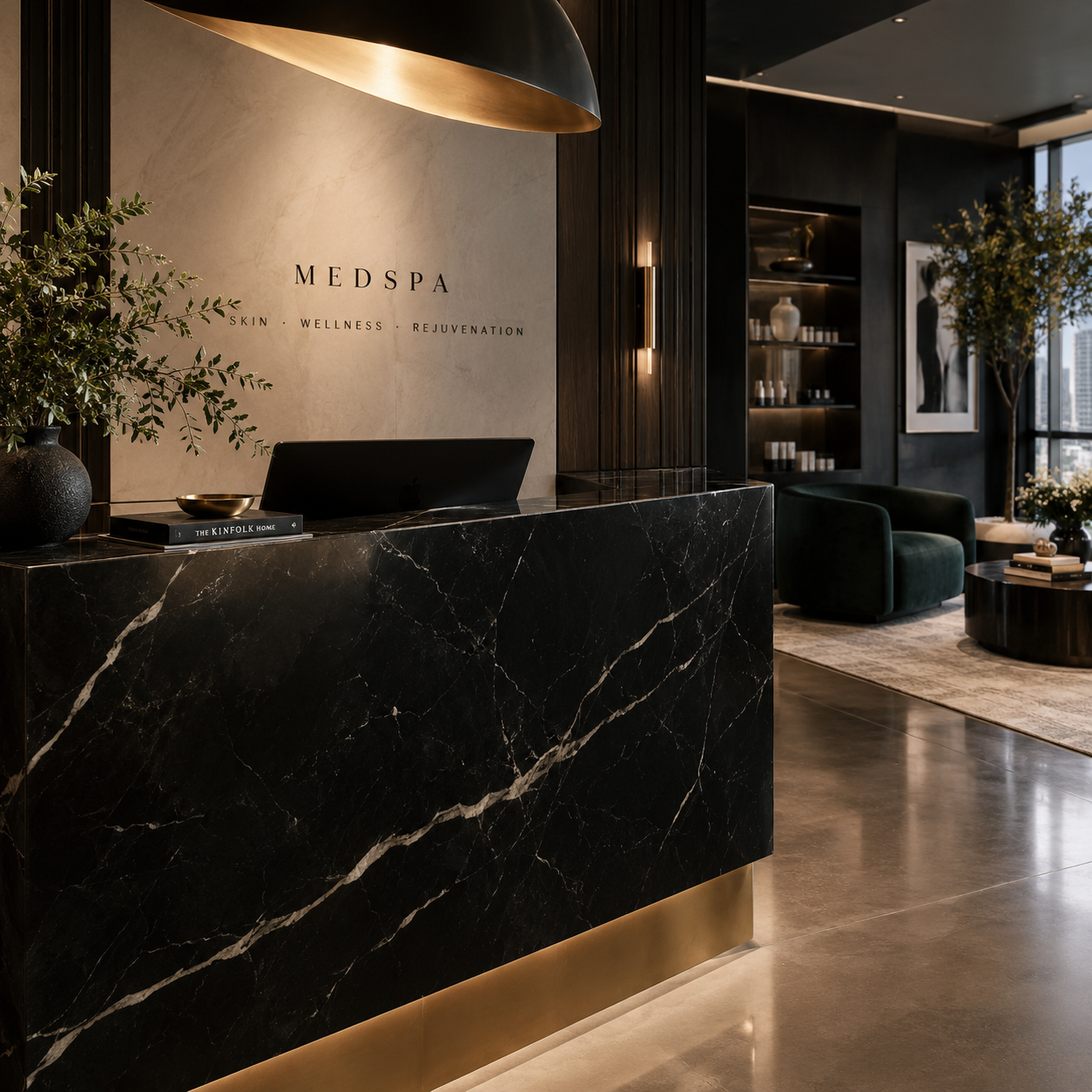
The medical aesthetics industry is expanding faster than almost any other sector in healthcare.
In the United States alone, the medspa market has grown from roughly 1,600 locations in 2010 to more than 10,500 medspas today, with projections estimating 13,000+ clinics operating by 2026.
At the same time, the industry is expected to surpass $17 billion in U.S. revenue by the end of the decade, growing at an annual rate of nearly 14%.
Demand is undeniable.
Patients are increasingly choosing non-surgical treatments like injectables, laser procedures, and skin rejuvenation instead of traditional cosmetic surgery.
But while opportunity is expanding rapidly, so is competition.
Opening a medspa is easier than ever.
Building a profitable, scalable aesthetic practice is not.
At DAC, we work directly with aesthetic practices scaling toward eight-figure growth, and we see the same pattern repeatedly:
The practices that succeed aren’t simply good at treatments.
They are strategically structured businesses built for growth.
And most new owners underestimate three critical realities before they launch.
What New Owners Don’t Anticipate
When providers decide to open a medspa, they often focus on branding, treatments, and equipment.
What they rarely anticipate are the operational realities that determine long-term success.
The average medical spa generates approximately $1.8M–$2.2M in annual revenue, but only a fraction of practices successfully scale beyond $3M+ per year.
Why?
Because operational complexity increases quickly.
Staffing and Team Dynamics
Staffing is the largest expense for most medspas, with payroll often accounting for 35–45% of total revenue.
Hiring in aesthetics isn’t just about skill.
It’s about building a team structure that aligns incentives, performance, and culture.
Many new owners experience challenges such as:
injector turnover
commission disputes
productivity gaps
inconsistent patient experiences
High-performing practices solve this early by designing clear compensation models and operational systems that support both growth and retention.
Cash Flow Management
Even successful medspas can experience cash flow strain.
Operating expenses typically include:
payroll and commissions
inventory and injectable products
equipment financing
marketing spend
rent and overhead
Without strategic financial planning, growth itself can create pressure on cash flow.
Practices that scale successfully build financial forecasting and revenue management systems from the beginning.
Vendor Contracts and Equipment Deals
Laser devices, injectable supply agreements, and software platforms often involve multi-year contracts.
Many new owners sign agreements without fully evaluating:
financing structures
revenue expectations from devices
minimum purchase commitments
These contracts can quietly consume thousands of dollars in monthly profit.
Experienced operators negotiate vendor relationships strategically to protect margins.
Marketing Without ROI
The aesthetics industry is highly marketing-driven.
In fact, medspas collectively spend billions annually on digital marketing and patient acquisition.
But many practices lack clear insight into what actually produces patients.
Without performance tracking, practices often:
spend heavily on ads that don’t convert
rely on agencies that measure clicks instead of bookings
fail to understand lifetime patient value
Successful practices treat marketing as a measurable revenue engine, not an expense.
The Compliance Risk Most Owners Overlook
Operational mistakes slow growth.
Compliance mistakes can threaten the entire business.
Medical aesthetics operates within a complex regulatory environment that includes healthcare laws, corporate ownership restrictions, and state-specific medical regulations.
As the industry grows rapidly, regulators are paying closer attention.
Improper licensing, inadequate medical oversight, or incorrect ownership structures can expose practices to significant legal risk.
MSO Structuring
Many aesthetic practices operate under a Management Services Organization (MSO) structure.
This separates the clinical entity from the business operations.
The way these entities interact determines:
ownership rights
revenue distribution
operational authority
If structured incorrectly, practices may face legal exposure related to fee-splitting or medical ownership rules.
Corporate Practice of Medicine (CPOM)
CPOM laws determine who can legally own and control medical practices.
These laws vary by state and directly affect:
ownership structures
provider compensation
business management
Misunderstanding CPOM regulations can create serious legal complications.
Medical Director Agreements
Medical directors are responsible for ensuring appropriate clinical oversight.
Their contracts must clearly define:
supervision responsibilities
compensation structure
regulatory compliance obligations
Without clearly defined agreements, practices risk regulatory scrutiny or liability.
The Opportunity Cost of Waiting
While new owners often focus on potential risks, there is another factor just as important:
The opportunity cost of delay.
The aesthetics industry is growing at an extraordinary pace.
In the past five years alone, non-surgical cosmetic procedures have increased by nearly 80%, fueled by consumer demand for treatments with minimal downtime.
Meanwhile, the number of medspas entering the market continues to rise every year.
Patients are also spending more on aesthetic care.
The average aesthetics patient spends thousands annually, with lifetime treatment value frequently exceeding $15,000 per patient.
In other words: Demand is strong.
But competition is growing just as quickly.
Every month a practice delays launching means:
lost patient relationships
lost brand visibility in the market
lost recurring revenue from treatments and memberships
Because once patients establish trust with a provider, they tend to stay.
The practices that launch earlier often build long-term patient loyalty and recurring treatment revenue before competitors even enter the market.
The Most Successful Practices Build With Strategy
The aesthetic industry presents one of the most compelling opportunities in healthcare today.
But success rarely happens by accident.
The practices that consistently grow past $3M–$5M in annual revenue share several characteristics:
strategic operational systems
strong financial planning
clear compliance structures
proven growth strategies
At DAC, we work directly with aesthetic practices and founders to build the operational frameworks, business strategy, and growth systems required to scale.
Because in an industry growing this quickly, the difference between a struggling clinic and a market-leading practice often comes down to how the business is built from the beginning.
The opportunity in aesthetics is enormous, and the practices that win are the ones built to scale.